February 7, 2026

WRITING ADVICE: Short Stories – Advice and Observation #36A: “Jack McDevitt & Me”

In this feature, I’ll be looking at “advice” for writing short stories – not from me, but from other short story writers. In speculative fiction, “short” has very carefully delineated categories: “The Science Fiction and Fantasy Writers of America specifies word lengths for each category of its Nebula award categories by word count; Novel 40,000 words or over; Novella 17,500 to 39,999 words; Novelette 7,500 to 17,499 words; Short story under 7,500 words.”

I’m going to use advice from people who, in addition to writing novels, have also spent plenty of time “interning” with short stories. While most of them are speculative fiction writers, I’ll also be looking at plain, old, effective short story writers. The advice will be in the form of one or several quotes off of which I’ll jump and connect it with my own writing experience. While I don’t write full-time, nor do I make enough money with my writing to live off of it...neither do most of the professional writers...someone pays for and publishes ten percent of what I write. When I started this blog, that was NOT true, so I may have reached a point where my own advice is reasonably good. We shall see as I work to increase my writing output and sales! As always, your comments are welcome! Without further ado, short story observations by Jack McDevitt – with a few from myself…


First of all, I didn’t know that Jack McDevitt had been a classroom teacher before he “got famous”! In an interview marked below, McDevitt said, “Science fiction is, in the short form, at its most compelling. Aside from the Bradbury, any good Arthur Clarke collection, and the Science Fiction Hall of Fame anthologies. And I suspect several hundred other strong candidates. My all-time favorite story, Clarke’s ‘The Star,’ would probably get a teacher in trouble, so we’d want to stay clear of that.”

Funny, I think the reaction today would be, “Obviously the Christian god (if there was one) would be happy to explode a star as a show of force to Humanity to make them do what it wanted them to do!” Be that as it may…

I LOVE writing short. I even teach it during an elective summer school session for elementary-aged kids. You have NO idea how resistant they are to my suggestion. A parent even emailed me to tell that I had “no right” to place any limits on THEIR child – even the title of the class, the advertising, and the stated purpose is WRITING TO GET PUBLISHED. I use my first two novels as an example; I note that Andy Weir did the same thing: I wrote both FIRST as blog entries, then collected them together, gave them a hard edit, put them away for several months…well, I’m certain you know that taking even a short story from idea to polished finish – and eventual publication.

Here’s a few things I learned from McDevitt that I’ve actually applied to my writing:

Jack McDevitt emphasizes that short stories should focus on crafting an immersive experience, often relying on "what if" scenarios derived from everyday observations. He advises minimizing technical, hard-science explanations in favor of character-driven narratives, ensuring the plot moves toward a clear, impactful resolution. His approach often involves surprise endings and concise, impactful prose.

OK – while I’ve done this SOMETIMES, I’m not consistent. Not the “sciencey” stuff, but developing character. When I look at the list of publications on my blog site. My most recent rejection added the following note: “There are some interesting ideas here, but its all talk, the story, the action itself, is hidden from us. We could have seen much more about the relationship between Dex and his grandmother, and the loss he is feeling and how this project is bringing back their closeness. How Dex is feeling about being Salma's guardian and how she feels with her mother being on another planet. Salma clearly doesn't believe in fairies for most of the story and is humoring Dex. This story could be so much more than it is."

Ouch! HOWEVER, while I noticed it when I got the email (but skimmed over it), the commenter said, …“could be so much more than it is.” rather than, “It could have been so much more…” Hmmm…I’ve been going through old, rejected short stories to see if there’s anything I can do to save them. Maybe THIS one should be on the top of the stories to rescue…

The "What If" Approach: Many of his ideas stem from observing daily life, such as in a restaurant or a museum, and imagining scenarios based on those observations.


Ending First: He emphasizes the importance of knowing where the story ends before starting, ensuring the plot moves efficiently toward a resolution.

Overcoming Writer's Block: His first story, originally rejected, was only successful after major rewrites and taking advice, highlighting the importance of persistence and revision. The thing here is that I don’t believe in “writer’s block”. I know there are countless articles out there that purport to “cure writer’s block”, but…well, I won’t write here what I ACTUALLY think, but suffice it to say, if you find yourself confronted by it, just write ANYTHING. I once read that even writing a grocery list – physically writing it on paper – is beneficial to jump-start!

His work often features a strong, logical, and sometimes surprising, conclusion, as seen in his collection A Voice in the Night
. I leave you with this piece of advice from him: “Keep writing. Don’t take a couple of years off. We need to keep our readers interested and happy. So produce some output.”

My only question is: What if I just couldn’t SELL anything? Hmmm? Love to ask him THAT question!

Constructing Experiences: Rather than just telling a story, the goal is to create an illusion of reality, allowing the reader to "live" through the events. Not sure what this means right now, but next time I’ll explore more next time

References: [If you prefer your interviews as YouTubes: https://libguides.ccga.edu/mcdevitt/videos]. I gleaned my information from these sources: https://www.sfwa.org/2011/12/21/nebula-awards-interview-jack-mcdevitt/#:~:text=Time%20Travelers%20Never%20Die%20was,and%20be%20lifted%20to%20safety. ; https://clarkesworldmagazine.com/mcdevitt_interview/; do a GOOGLE search for the following: How do I create an illusion of reality, allowing the reader to "live" through the story events? Image: https://blogger.googleusercontent.com/img/a/AVvXsEhK6miXJMTMNyB3kzq-r6I2LVCTZJj0CDS0dPV2Qapl6e9rZPuHx2u5QKcKT1QGeDg1_tPMv-lpnuSr_eiBjwPXmex9mcgtuH2-SUtZEpGWV0_HdtJQelVt5K69NulJBUqNju5GNjHgQibXsIo4NeWpTOj4ai85jCRjMHOtwtkqshzxFvZPUSjXZNq6=s320

January 31, 2026

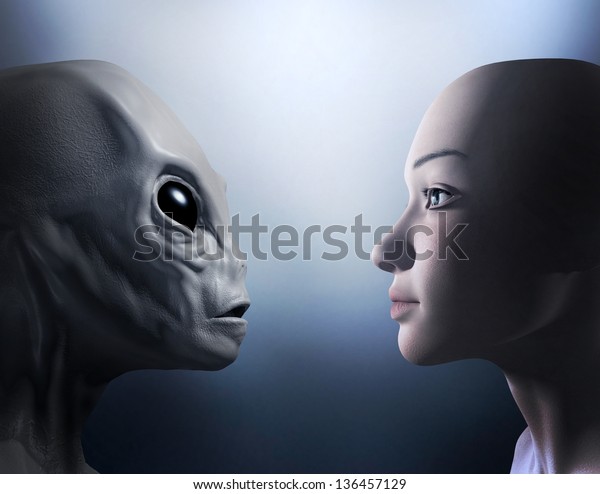
CREATING ALIEN ALIENS Part 43A: Aliens Based on Animals We Know On Earth – the Octopus

Five decades ago, I started my college career with the intent of becoming a marine biologist. I found out I had to get a BS in biology before I could even begin work on MARINE biology; especially because there WEREN'T any marine biology programs in Minnesota. Along the way, the science fiction stories I'd been writing since I was 13 began to grow more believable. With my BS in biology and a fascination with genetics, I started to use more science in my fiction.
After reading hard SF for the past 50 years, and writing hard SF successfully for the past 20, I've started to dig deeper into what it takes to create realistic alien life forms. In the following series, I'll be sharing some of what I've learned. I've had some of those stories published, some not...I teach a class to GT young people every summer called ALIEN WORLDS. I've learned a lot preparing for that class for the past 25 years...so...I have the opportunity to share with you what I've learned thus far. Take what you can use, leave the rest. Let me know what YOU'VE learned. Without further ado...


“An octopus could NEVER evolve into intelligence – not equal to Humans! An octopus couldn’t use fire or walk or go on the surface…”

Lots of people would argue that octopuses would NEVER have evolved Human intelligence or been able to make tools – because they can’t use fire to form metal tools.

“But is METAL absolutely essential to an intelligent civilization?” I ask.

“Well, DUH! How could they make cars, or trains, or planes, or computers, or spears, or machine guns, or lasers? You need ALL THAT STUFF to have an intelligent, space-worthy civilization!” you reply.

So…let’s look at it. ALSO: I am going to bar myself from having octopi being able to communicate telepathically, or manipulate matter telekinetically.

But what about telecommunication, or telescopes (duh! To see the stars!), or teleconference(!), or telemarket (…OK, I’ll grant you we do NOT need telemarketers, or Teletubbies, or telenovelas, either; being without teleology wouldn’t kill anyone, either, though TELEVANGELISM might be a fascinating dive down a rabbit hole! We'll see...), television, telegraph, telephoto lenses…surrender yet??? Good. I couldn’t find many others that made sense.

The thing is, is that most of stuff up above needs something even more essential to Human civilization: ELECTRICITY. We all know that electricity and water (especially SALT water) do NOT mix…what? What about salt water? Salt in water INCREASES the ability of water to conduct electricity – by fifty to A HUNDRED times. So, being under water doesn’t NECESSARILY eliminate an octopoid alien being able to become Human-level intelligent.

So…what if they could produce electric CURRENT and an electric DISCHARGE. By definition a CURRENT: “…he flow of electrons or other charged particles (ions) through a conductive material…conventional current is defined as moving from positive to negative. In a Direct Current (DC): In batteries, charges move in one direction (like when I UNplug my computer.) With Alternating Current (AC): Charges periodically reverse direction, like in the charger this computer is plugged into.

Can octopuses do either one? No, they can’t. But electric eels can…they create direct charges. “…electric eels and rays use a DC to stun or kill prey. But some can use weak pulses for navigation and communication in dark, murky water, similar to radar. Some insects like bumblebees create small amounts of static electricity through their wings to communicate with their hive and can control their discharge, with some, like the electric eel, using lower voltages to track prey before releasing a high-voltage, debilitating shock.”

So, the octopoid intelligence would have to be able to be like an electric eel…OK, I’ll grant that; and THAT is just about enough for today! Come back next week and I’ll push my “intelligent alien octopuses” agenda a bit harder!

Sources: https://letstalkscience.ca/educational-resources/backgrounders/generating-electricity-electric-animals#:~:text=Electrogenic%20animals%20can%20generate%20their%20own%20electricity.,Fish%20Most%20electrogenic%20animals%20are%20also%20electroreceptive.
YOUTUBE: https://www.youtube.com/watch?v=RJurDYBLLEw&t=2s
SF with “Octopus Intelligences”: https://meandinkblog.wordpress.com/2024/02/23/fiction-books-octopus/
https://en.wikipedia.org/wiki/Octopus

January 23, 2026

Something FUN To Do (with a great deal of CARE!!!) Today


Posted on FACEBOOK this morning (like I said, it's currently -18 F here in Minnesota)

Guy Stewart
https://www.facebook.com/guy.stewart.946

Something FUN to do today (and any other day it's 40+ degrees below the freezing point of water. At this moment, in Minnesota, it is -18F....1) Clear a path from your microwave to a door that leads outside. Make sure there's nothing to trip over; 2) WARNING!!!! DO NOT ACT LIKE AN INVINCIBLE TEENAGER!!! (This means YOU N, N, Z, J, L, M, R, R...and any OTHER person reading this who had me as a science teacher!) 3) Get heavy winter gloves handy. 4) Get a sturdy coffee cup. 5) Fill the cup 2/3 full of water. 6) Put it in the microwave on high for (about) 3 minutes or UNTIL THE WATER IS BOILING HOT (literally BUBBLING). 7) PUT THE GLOVES ON!!!! Grab the cup in one hand and make your way AS QUICKLY AND SAFELY AS POSSIBLE to the door. Open it, take a step out and THROW THE WATER (NOT, NOT! NOT!!! THE CUP!!!!!) into the air. 9) Marvel at the wonder of Nature or the Universe or God (choose your supernatural "explains the weirdness of the world" point of view)! Let me know what you think! THIS IS NOT FOR YOUNGSTERS -- TEENS OR OLDER TO ELDERS (I'm almost 70) but kidlings can watch!


January 22, 2026

IDEAS ON TUESDAYS 699

Each Tuesday, rather than a POSSIBLY IRRITATING ESSAY, I'd like to both challenge you and lend a helping hand. I generate more speculative and teen story ideas than I can ever use. My family rolls its collective eyes when I say, "Hang on a second! I just have to write down this idea..." Here, I'll include the initial inspiration (quote, website, podcast, etc.) and then a thought or two that came to mind. These will simply be seeds -- plant, nurture, fertilize, chemically treat, irradiate, test or stress them as you see fit. I only ask if you let me know if anything comes of them. Octavia Butler said, “SF doesn’t really mean anything at all, except that if you use science, you should use it correctly, and if you use your imagination to extend it beyond what we already know, you should do that intelligently.”

SF Trope: Climate Fiction (Cli-Fi) – "Stories centered on climate collapse, resource wars, adaptation to extreme environments, and societal breakdown due to environmental disaster.” PLUS Reality Blurring – “Deep dives into advanced VR, simulation theory, and the philosophical questions of what's real versus simulated (e.g., The Matrix but with more nuance).”
Current Event: https://en.wikipedia.org/wiki/Upload_(TV_series)

Zhi Zonghan Li found himself laying on his back, shivering.

For several moments, all he could do was blink, unable to move his arms or legs. He tried, but he couldn’t even move a finger. Abruptly, he felt extremely tired. He tried to stay awake, but even though he felt more than one of his fingers move, he fell asleep.


Zhi Zonghan Li found himself laying on his back, sweating. It pooled in his navel. It dripped maddeningly down his sides. The droplets slid into his eyes, and even though he blinked repeatedly, some of the stinging sweat stung enough for him to squinch his eyes tightly. He tried to talk, but all he managed was a wheezing rasp. He fell asleep again.


Zhi Zonghan Li found himself laying on his back, breathing slowly, calmly, and no longer naked. He didn’t remember noticing that his first two times waking up. He moved his hands. The fingers worked fine. He curled his toes and found they also worked just fine.

Then he tried to sit up and found he was strapped firmly to a table – a surgery table, he was fairly certain, based on the straps around his wrists, across his chest, at his waist, and thighs. He was also naked. He didn’t remember being naked before, though he was fairly certain he’d been dressed in something before.

A face suddenly appeared above him and said something in English. He knew he didn’t know much English, though he’d worked somewhere in the Solar System where he’d spoken English as a matter of convenience. He tried to respond, but the hand of the body attached to the face smiled while placing the hand gently over his mouth. They spoke, the voice oddly asexual, “Don’t move. You’ve been in suspended animate for the past few months. Don’t try and talk either, give your vocal chords a chance to warm up. You could damage them if you tried to use your voice like to talk…or scream. Look up then down to tell me you agree, Zhi Zonghan Li.”

He wanted to tell the face that they could call him Zhi. All of the English-speakers he’d worked with used the abrupt truncation of his name as a matter of convenience. He went along with it because they usually mushed his name-sounds into a Western rush to speak. The face said, “You’ve been sleeping for several months. You were put under because your skills in climate designing were deemed too important to allow them to die with your body.” He must have widened his eyes because the voice said, “Don’t worry. The climate disaster was averted while you and most of the rest of the wealthy world slept.” The face – he realized what he’d recognized as a female face – was actually that of a very young man.

Zhi Zonghan Li found his voice, albeit a bare whisper, “Solved it?”

The face grimaced, looked around then leaned closer and whispered, “Not exactly…”

January 17, 2026

POSSIBLY IRRITATING ESSAYS: I. Why Does STAR TREK Mean So Much To Me?

This isn’t inspired by anything but my own thought processes. I’ve written on TREK several times…er…I guess like THIRTY times. If you go right, scroll down to STAR TREK and click on it, you’ll see what I’ve written so far. Read and comment if you’d like, but I’ve been having some new thoughts lately after my wife and I watched two separate ST episodes – the first time Q appeared…and the LAST time Q appeared.

If you DON’T know anything about Star Trek and Picard and Q, here’s some bits of pertinent information:

STAR TREK: “The franchise began with Star Trek (The Original Series), which premiered on September 6, 1966, on Canada's CTV network.[4] In the United States, it debuted on September 8, 1966, on NBC. The series followed the voyages of the crew of the starship USS Enterprise, a space exploration vessel built by the United Federation of Planets in the 23rd century, on a mission "to explore strange new worlds, to seek out new life and new civilizations, to boldly go where no man has gone before". In creating Star Trek, Roddenberry was inspired by C. S. Forester's Horatio Hornblower series of novels, Jonathan Swift's 1726 novel Gulliver's Travels, the 1956 film Forbidden Planet, and television westerns such as Wagon Train.” (https://en.wikipedia.org/wiki/Star_Trek)

STAR TREK: NEXT GENERATION – “an American science fiction television series created by Gene Roddenberry. It originally aired from September 28, 1987, to May 23, 1994, in syndication, spanning 178 episodes over seven seasons. The third series in the Star Trek franchise, it was inspired by Star Trek: The Original Series. Set in the latter third of the 24th century, when Earth is part of the United Federation of Planets, it follows the adventures of a Starfleet starship, the USS Enterprise (NCC-1701-D), in its exploration of the Alpha quadrant and Beta quadrant in the Milky Way galaxy.” (https://en.wikipedia.org/wiki/Star_Trek:_The_Next_Generation)

JEAN LUC PICARD: “Jean-Luc Picard is a fictional character in the Star Trek franchise, most often seen as the commanding officer of the Federation starship USS Enterprise (NCC-1701-D). Played by Patrick Stewart, Picard has appeared in the television series Star Trek: The Next Generation (TNG) and the premiere episode of Star Trek: Deep Space Nine, as well as the feature films Star Trek Generations (1994), Star Trek: First Contact (1996), Star Trek: Insurrection (1998), and Star Trek: Nemesis (2002). He is also featured as the central character in the show Star Trek: Picard (2020–2023).” I will note that the actor Patrick Stewart, is also a highly “decorated” individual: “Sir Patrick Stewart is an English actor. With a career spanning over seven decades of stage and screen, he has received various accolades, including two Olivier Awards and a Grammy Award, as well as nominations for a Tony Award, three Golden Globe Awards, four Emmy Awards, and three Screen Actors Guild Awards. He was knighted by Queen Elizabeth II for services to drama in 2010.” (https://en.wikipedia.org/wiki/Jean-Luc_Picard)

Lastly there is Q: “Q is a fictional character, as well as the name of a race, in the Star Trek franchise, appearing in six of the ST franchise series…as well as in related media. The most familiar Q is portrayed by John de Lancie. He is an extra-dimensional being of unknown origin who possesses immeasurable power over time, space, the laws of physics, and reality itself, being capable of altering it to his whim. Despite his vast knowledge and experience spanning untold eons, he is not above practical jokes for his personal amusement, a Machiavellian or manipulative purpose, or to prove a point. He is said to be almost completely omnipotent and continually evasive regarding his true motivations.

“Beginning with the pilot episode of The Next Generation, "Encounter at Farpoint", Q became a recurring character, with pronounced comedic and dramatic chemistry with Jean-Luc Picard. He serves as a major antagonist throughout The Next Generation, playing a pivotal role in both the first and final episodes.” (https://en.wikipedia.org/wiki/Q_(Star_Trek))

I’m going to stop here for now as I’m sure there’s plenty there to familiarize yourself with – and in the hope that these tidbits will help you make sense of what I’m REALLY on about!

Image: Flag of the United Federation of Planets taken by author

January 13, 2026

IDEA ON TUESDAY 698

Each Tuesday, rather than a POSSIBLY IRRITATING ESSAY, I'd like to both challenge you and lend a helping hand. I generate more speculative and teen story ideas than I can ever use. My family rolls its collective eyes when I say, "Hang on a second! I just have to write down this idea..." Here, I'll include the initial inspiration (quote, website, podcast, etc.) and then a thought or two that came to mind. These will simply be seeds -- plant, nurture, fertilize, chemically treat, irradiate, test or stress them as you see fit. I only ask if you let me know if anything comes of them. Regarding horror, I found this insight in line with WIRED FOR STORY: “ We seek out…stories which give us a place to put our fears…Stories that frighten us or unsettle us - not just horror stories, but ones that make us uncomfortable or that strike a chord somewhere deep inside - give us the means to explore the things that scare us…” – Lou Morgan (The Guardian)


Old Horror Story/Series “for kids”: Goosebumps Books 
H Trope: Abusive Parents (with a touch of SF)
Event: http://www.dailymail.co.uk/news/article-2536926/Sharon-Glass-trial-Boy-12-testifies-starved-locked-closet-fathers-girlfriend.html (Rewatched an old, old movie a few nights ago with this precise theme: “Forrest Gump”...Tropes don’t grow old.)

Austin Ventura stood in his room. What should he do? What could he do? Carlos Rodriguez Cruz – his best friend since kindergarten – had run off somewhere. Worse yet, he’d been gone for anywhere from a few minutes to four hours. Austin texted Carlos’ sister, Paulina, “You still there?”

“Not going anywhere. Really.”

“Can I come over?”

“Here?”

“Where?”

“Meet me at the school.”

“I can get there in ten.”

“No car. Give me an hour.”

“Why?”

“Walk.”

“I can come and get you,” Austin clicked. He waited. His screen dimmed to dark. She wasn’t going to answer. Shaking his head, he left the house, walking out the

front door. Mom and Dad had long ago given up trying to keep him in the place – he’d “escaped” so many times…and they’d had to pick him up from the police station for curfew violations so many times, that they’d finally said if he was going to go out whenever he felt like it, he could pick himself up.

They refused. He tested their resolve exactly once. That was the night he had to walk home from down town Minneapolis. His parents insisted the cops turn him out. The also lied about how far away they lived – they said they were staying in a nearby hotel. It had been just before Christmas. Austin was twelve.

When a cop car stopped to nab him, it turned out it was the same one who’d grabbed him the first time. The lady had said, “Your parents made you walk home?”

Miserable – even in his fancy Columbia ReflectiveHeat Brand – in just his jacket and Converses, the cop relented and gave him a ride home. When he dropped Austin off in front of the mansion, he’d leaned forward, looked at the entryway and said softly, “I can file for child abuse if you want...”

“No!” Austin had exclaimed. The publicity would ruin Dad. Mom would never speak to him again. “I’ve learned my lesson.”

The cop had made a face, shrugged and said, “Suit yourself, kid. But if you ever change your mind,” he’d squirted a contact email to Austin’s cellphone then went on his way.

Austin-in-the-present shook his head and sighed, the only lesson he’d learned that night was that he had to be a helluva lot sneakier from then on. And he’d learned exactly how mad Dad could get. He set off to meet Paulina.

Names: ♂ Mexico, Mexico; ♂ Minnesota, Italy (= “baby in the woods”, “foundling”); ♀ Spanish form of French name
Image: https://m.media-amazon.com/images/I/51niGRrH6DL.jpg

January 10, 2026

JAX LUNAR LUMBER Chapter 13.5 A BRIEF INTERLUDE WHILE I TRY SOMETHING NEW!


On the way to the neighborhood Home Depot for the obligatory weekend project as well as a load of flowers and potting soil, I started musing on my hitch as a “yard ape” for a company called Knox Lumber. We, too were busy this time of year, and it was a familiar feel whenever I went to one of these stored. Know was one of the original “Do It Yourself” (aka DIY) stores, a precursor to today’s Lowes, Menards, and Home Depot. Eventually bought out by Payless Cashways https://en.wikipedia.org/wiki/Payless_Cashways

The rumor in the store was that you could build an entire house by waiting patiently for a year while EVERYTHING went on sale…Rolling down the driveway, I suddenly had a thought and snickered. When my wife asked, “What?” I shook my head. “No, what?” I reiterated the train of thought above, then added, “I was wondering if it would be possible to build a colony on the Moon using just what you could buy at Knox?” We pondered it for a few moments, then suddenly said in unison, “Yes!”

Inspired by Matt Weir, the result of my musings continues below.


It just turned into 2026 three days ago, so I went back to Chapter 3 and copied the following:

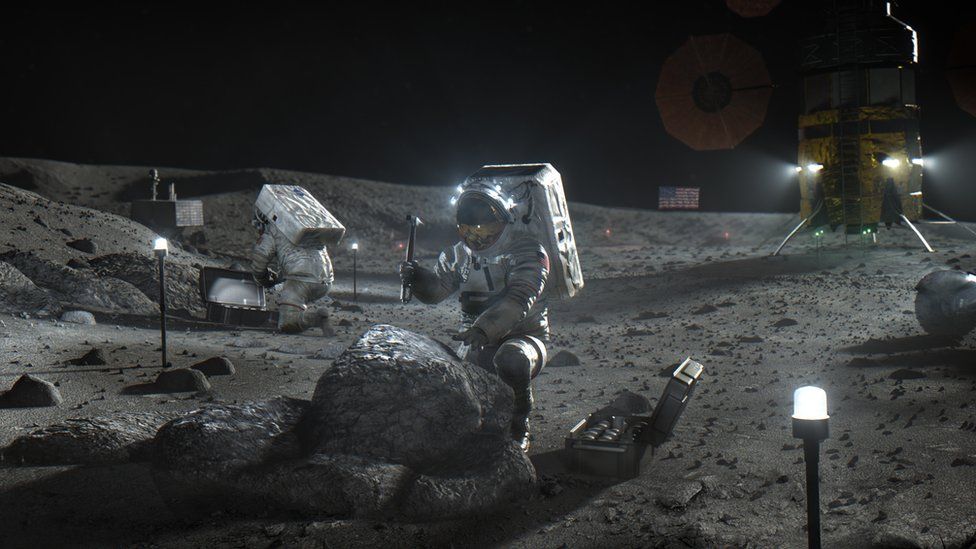
"Neil Armstrong and Edwin "Buzz" Aldrin were the first of 12 human beings to walk on the Moon. Four of America's moonwalkers are still alive: Aldrin (Apollo 11), David Scott (Apollo 15), Charles Duke (Apollo 16), and Harrison Schmitt (Apollo 17)" -- four men left who walked. How many people flew to the Moon and back? In addition to the 24 Apollo astronauts, four others are slated to follow them for the first time in 50 years in November of 2024...”

Couple things, NASA just announced Artemis WON’T be going to the Moon until 2027…so that’s changed. “In all, 24 American astronauts made the trip from Earth to the Moon between 1968 and 1972. Three astronauts made the journey from Earth to the Moon twice: James Lovell (Apollo 8 and Apollo 13), John Young (Apollo 10 and Apollo 16), and Gene Cernan (Apollo 10 and Apollo 17).”

Nextly, “Four of America's moonwalkers are still alive: Aldrin (Apollo 11), David Scott (Apollo 15), Charles Duke (Apollo 16), and Harrison Schmitt (Apollo 17).” (https://science.nasa.gov/moon/moon-walkers/)

Charles Duke is 90. Harrison Schmitt is 90. Edwin “Buzz Aldrin” is 95. David Scott is 93. I’m thinking that in another 10 years, all of the “First Men On The Moon” will be gone.

All of that to say, I think I’m going to play around with writing pieces of SnapFix (aka as flash fiction to normal folks!) in this world I’ve managed to create! Pieces LESS than 1500 words. I’m also not going to NECESSIARILY finish them on the blog on the off chance they might be “good enough” to submit.. I AM going to follow my “rules” for writing SnapFix. You can see my Reels on the subject here: https://www.instagram.com/guy_stewart75/

Select Your Genre
Choose An Overarching Theme
Use One Or Two Key Characters
Make Every Sentence Count And Don’t Rush
Prompt Visualization
Start In The Middle
Use Descriptive, Concise Language
Deal With A Single Conflict
Create Surprise And Provide A Twist
Present A Memorable Last Line
Write A Powerful Title
DRAFT!
DRAFT!
DRAFT!

January 9, 2026

Sold A STORY TODAY!!! "High Carnival" -- that's all I know right now!

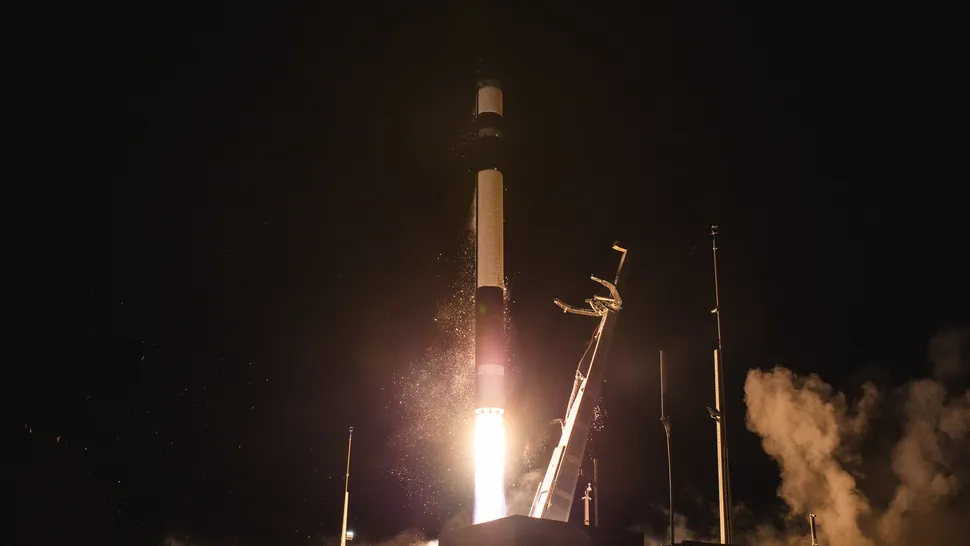
Just so you know, my short story, "High Carnival" was accepted today at AMAZING STORIES online today! What's it about? "What if NASA launched space missions from mobile platforms using local airports? What if they made sure there was a safe place on each launch for a truly determined person to go into space?"

January 8, 2026

 IF you read

MARTIAN HOLIDAY,

my hard science fiction

novel, PLEASE consider posting a review!

 Thanks!


January 6, 2026

IDEAS ON TUESDAY 697

Each Tuesday, rather than a POSSIBLY IRRITATING ESSAY, I'd like to both challenge you and lend a helping hand. I generate more speculative and teen story ideas than I can ever use. My family rolls its collective eyes when I say, "Hang on a second! I just have to write down this idea..." Here, I'll include the initial inspiration (quote, website, podcast, etc.) and then a thought or two that came to mind. These will simply be seeds -- plant, nurture, fertilize, chemically treat, irradiate, test or stress them as you see fit. I only ask if you let me know if anything comes of them? Regarding Fantasy, this insight was startling: “I see the fantasy genre as an ever-shifting metaphor for life in this world, an innocuous medium that allows the author to examine difficult, even controversial, subjects with impunity. Honor, religion, politics, nobility, integrity, greed—we’ve an endless list of ideals to be dissected and explored. And maybe learned from.” – Melissa McPhail.


Fantasy Trope: The Quest
Event: http://contemplativequest.com/, http://en.wikipedia.org/wiki/Alice's_Adventures_in_Wonderland

SvÄ›tlana Angelika pursed her lips, looking out over the hectares of forest. In the MSP Vertical Village, it was mostly deciduous trees – oak, maple, patches of white-barked birch, poplar – with a sprinkling of pine trees. The concourse she and Uthman Aali were on was packed with people. Not a hundred thousand, for sure, but too many to think. “We need to go somewhere,” she said abruptly, speaking in the too loud manner of all the inhabitants of Vertical Villages everywhere.

Uthman gave her a look that said, “You’re crazy.”

She slugged him in the shoulder. It was a little kid move – but then, they’d been friends since they were three years old. “No, I’m serious. We need to go somewhere real.”

Without changing his stare, Uthman said, “We can go up to the six hundredth floor...”

“No! I don’t mean here. This is all so...boring. We need to go,” she pause, “through a looking glass.”

“A what?”

“A looking glass! Haven’t you ever read Alice in Wonderland?”

“I might have seen a threevee of it once. Wasn’t it a cartoon?”

“Yes – and no, you haven’t seen this. Lewis Carroll wrote a novel, it’s true. But he was a mathematician. His logic is all over the book. Math. Everything.”

Uthman snorted, “It sounds like science fiction.”

“It’s fantasy – she steps through a mirror.”

“If it’s math and logic, it’s science fiction.”

“There are talking rabbits,” said SvÄ›tlana. “And a talking, disappearing cat. As well as a talking, smoking caterpillar, talking mice, and soldiers made of playing cards.”

“OK. You win. It’s a fantasy. But what does it have to do with us? What kind of mirror can we jump through? I’m sure there are some here – but...”

“The windows. We can jump through one of those.”

“A window?”

“Come on, let’s go to the outer walls. We’ll leap through one of those!” She turned and ran, Uthman running after her.

Names: ♀ Czech, Roman; ♂ Arabic, Hindu