Initially, I started this series because of the 2021 World Science Fiction Convention, DisCON which I WOULD have been attending in person if I felt safe enough to do so in person AND it hadn’t been changed to the week before the Christmas Holidays…HOWEVER, as time passed, I knew that this was a subject I was going to explore because it interests me…
Today’s Source: https://www.forbes.com/sites/jamiecartereurope/2026/07/01/why-the-spacex-ipo-brings-a-new-era-of-asteroid-mining-closer/ (“An IPO is when a company issues shares to new investors & gets admitted to a stock exchange. Public can now apply for shares in more IPOs.”)
Foundational Resource: (A general Wikipedia post detailing what the authors currently know about asteroid mining: https://en.wikipedia.org/wiki/Asteroid_mining)
Noted Resources: https://en.wikipedia.org/wiki/List_of_asteroid_close_approaches_to_Earth, https://www.pharostribune.com/news/local_news/article_7fcd3ea5-3c14-533f-a8d5-9bf629922f34.html, https://www.fool.com/investing/2022/04/29/like-asteroid-mining-be-careful-what-you-wish-for/, https://www.nps.gov/wrbr/learn/historyculture/theroadtothefirstflight.htm, https://hackaday.com/2019/03/27/extraterrestrial-excavation-digging-holes-on-other-worlds/, https://www.planetary.org/space-missions/every-small-worlds-mission
Interesting Stuff That Might Apply To Mining Asteroids: https://www.bbc.com/news/articles/cgej7gzg8l0o
Mining the asteroids has hit the next obvious milestone. Expected to happen later this year: public issue of stock in an asteroid mining company! I can DO IT NOW! Not, of course that it will actually involve me…
My wife and I have safe investments. It seems that investing in asteroid mining would be slightly more speculative than we’d be comfortable with! OTOH…what if we DID do something like invest in an asteroid mining start up?
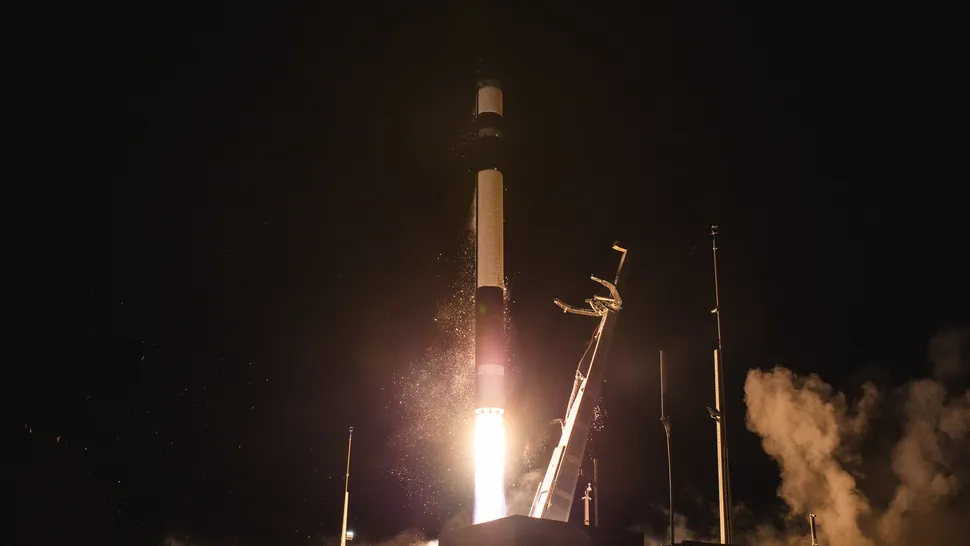
“As mentioned in its IPO (had to look this one up: Initial Public Offering where a private company sells shares of stock to the general public for the first time to raise money). SpaceX (best known for building and launching re-useable rockets “Falcon 9 Family plus Falcon Heavy & Starship pushes overall successful mission counts past 700 holding an overall success rate of a bit more than 98%.” (https://spacexnow.com/stats). When I graduated from high school (1975), the total number of re-useable rockets launched ZERO with an overall success rate of 100% (of ZERO)… That’s because ANYONE launching a reuseable space craft was PURE SCIENCE FICTION the year I became a legal adult…
At any rate, SpaceX has moved far and beyond launching spacecraft to show off to the rest of the world. “The first rocket to reach outer space was a American Bumper 2 two-stage rocket launched on February 24, 1949.” Of course, you have to read a bit farther to find out that “we” used the bottom of a German V-2 with a topper of an American WAC Corporal (https://www.ebsco.com/research-starters/history/first-rocket-reach-outer-space-launched)
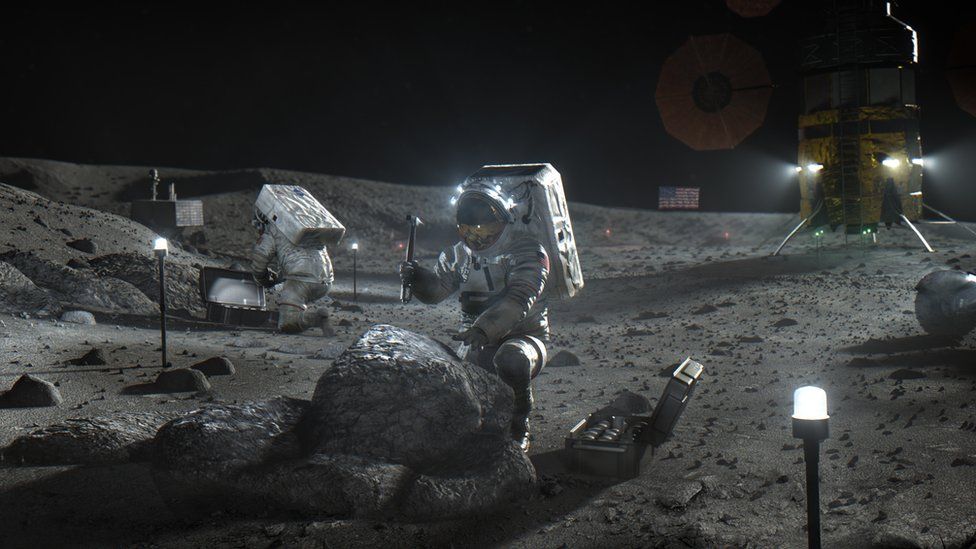
While the first thought that springs to mind is (of course) “Cities In Space” from which we might “leap to the STARS!” the facts will be much more mundane: “Water — found in carbonaceous asteroids — may matter before platinum-group metals. Water can support life support, oxygen production and rocket fuel, making it more useful in space than platinum shipped back to Earth.”
The main reason is because “Asteroid mining is expensive. Japanese Space Agency’s Hayabusa-2 mission returned samples from Ryugu in 2020, costing around $150 million, while NASA’s OSIRIS-REx mission, which returned samples from Bennu in 2023, cost around $1.16 billion.” I guess we’ll see about that…I can imagine more than one scenario where “evil billionaires bring back zillions of dollars in platinum and purchase Western Canada…”
While this seems more-or-less run-of-the-mill for most of you, I started reading SF when I was about 13. Books like HAVE SPACESUIT, WILL TRAVEL (Heinlein, 1958) were just a starry-eyed future for adolescent teen, me. Today? “Asteroid mining is currently being pursued more seriously than ever by several companies that are now moving beyond paper studies, with AstroForge having flown a deep-space asteroid-imaging mission and others developing or funding demonstration hardware for future asteroid-resource missions. The SpaceX filing does not make asteroid mining imminent, but it does put the idea inside the commercial strategy of the world’s most closely watched private space company.”
Other names that were attached to what we call North America, including several who have no real continent-wide concept, include hundreds of distinct Native American groups lived across the land, each speaking their own languages and having names for their specific homelands, local regions, or creation stories rather than the entire landmass. Some northeastern tribes, such as the Lenape and Iroquois called it "Turtle Island"; Cem Ānáhuac was the name used by the Aztec (Mexica) people; Norse explorers and Vikings called parts of coastal North America, “Vinland”: ; 1553 world map by Petrus Apianus, "Baccalearum" (aka Realm of the Codfish); 1569 map by Mercator “New India”; Abya-Yala was the name given by the Kuna people of Panama and has been adopted by modern Indigenous movements to refer to the American continent.
I guess it remains to be seen whether space becomes one more playground for the gargantuanly wealthy or a true “final frontier’. The diversion above made me think that when one culture “firmly names” something, it seems to be that it’s only a matter of time before another culture, with clearer goals and stronger craving is the one that will overshadow the others. Thus far, NASA and the other national space exploration bodies have had a virtual monopoly in space, picking and choosing what they wanted to do with it and discretely edging out their competition. Maybe the time has come for the “little gal” to move in a change the game.
Maybe space is about to go AMERICAN/CHINESE/JAPANESE commercial!
In this feature, I’ll be looking at “advice” for writing short stories – not from me, but from other short story writers. In speculative fiction, “short” has very carefully delineated categories: “The Science Fiction and Fantasy Writers of America specifies word lengths for each category of its Nebula award categories by word count; Novel 40,000 words or over; Novella 17,500 to 39,999 words; Novelette 7,500 to 17,499 words; Short story under 7,500 words.”
I’m going to use advice from people who, in addition to writing novels, have also spent plenty of time “interning” with short stories. While most of them are speculative fiction writers, I’ll also be looking at plain, old, effective short story writers. The advice will be in the form of one or several quotes off of which I’ll jump and connect it with my own writing experience. While I don’t write full-time, nor do I make enough money with my writing to live off of it...neither do most of the professional writers...someone pays for and publishes ten percent of what I write. When I started this blog, that was NOT true, so I may have reached a point where my own advice is reasonably good. We shall see as I work to increase my writing output and sales! As always, your comments are welcome!
Without further ado, short story observations by Ken Liu – with a few from myself…
Ken Liu began publishing fiction in 2002. His first published work was "Carthaginian Rose", a short story on mind uploading. Liu has said he wanted to become a writer so he could make stories that ‘turn values upside down and inside out to gain new perspectives’.” I also found out that he’s married with two kids – and that they homeschool their kids. (Which is what we did…both are now extraordinarily successful in their chosen careers…)
But REALLY: what makes him so popular? Googling with the question, “How is Ken Liu so publishable?”, I need to point out that not ONLY is he publishable, he has MULTIPLE translations of his own writing, as well as translating Chinese SF, THE THREE BODY PROBLEM (Cixin Liu) into English.
What is it then – and could I replicate ANY of it? The above search produced quite a bit of information (from several sources): “He has a… ‘multidisciplinary background, prolific output, rigorous work ethic, and mastery across multiple linguistic and creative domains.” He has…‘.worked as a software engineer at Microsoft, a corporate lawyer, and a litigation consultant before writing full-time. ‘His technical and legal background infuses his speculative fiction…with deep, realistic mechanics regarding engineering, governance, and culture.’ As well, ‘He maintains a steady, disciplined approach to drafting new material and consistently produces short stories, novels, and translations.’
OK…I have zero experience in the technical…of course, I was in my first year of college when he was born in 1976. I was born in 1957; pretty much the same year as “real computers”: FORTRAN launched; IBM announced it would ditch vacuum tubes and introduced its first commercial transistorized calculator (the 608); Engineer Russell Kirsch created the first digital image scanner scanning a 176x176-pixel picture of his infant son. (see it here: https://nistdigitalarchives.contentdm.oclc.org/digital/api/singleitem/image/p16009coll19/1541/default.jpg); AI pioneers Simon, Shaw, and Newell created the General Problem Solver (GPS), an early computer program designed to mimic human problem-solving. But should that matter? Isaac Asimov was born barely out of the Stone Age, and look what he wrote!
Liu observes about writing itself, “I’ve always loved telling stories. I think we, as a species, are persuaded more by stories than facts and figures, for both good and ill.” But why SHORT stories? I started with short stories, and after my behemoth MARTIAN HOLIDAY (at some 234,000 words), I’ve started to come back to short stories. Liu has a great observation on that, “…(difference between) epic fantasy and short stories?
It’s the difference between architecture and miniature painting.
What doesn’t change, however, is my voice.” So, I continue to struggle with this whole idea of voice. What IS my voice? What is “voice”? According to Google: “In short fiction, it’s the specific way words are put together…making…a story feel like a living person is telling it to you, rather than a machine. It’s the personality of the person telling the story. first-person, third-person stories. It’s also how people in the story sound when they talk and think. (This one is perplexing and I’ll need to think about it) It is the hidden fingerprint that stays the same across all their different stories. Finally, it’s the details the writer includes.”
What is Ken Liu trying to “say” in his writing? “Across his short stories and his Dandelion Dynasty epic fantasy series, he explores how people build meaning, adapt to new systems, and bridge cultural divides.” But even deeper than that, “…he takes everyday figures of speech or emotional states and makes them literal physical realities in a sci-fi or fantasy world. He views storytelling as the primary tool humans use to make sense of the universe and map out their lives.” “On writing short stories, Liu notes that while novels require heavy, structured scaffolding and external plotting to sustain interest, short stories can survive and succeed purely on voice, a single resonant image, or an emotional exploration.”
What am I trying to say with my stories? That’s something I’ve been exploring for several months now. I’m not sure even Liu knows what he’s trying to say – someone else is saying what they observe. But is that what he’s TRYING for? My life as a kid was hemmed on every side by “athletics” – basketball, football, hockey, fencing (mom), track, baseball, track and field, and all the “stuff” that went with them. I hated all of those, but found I loved biking (for miles and all over), swimming, and camping…but they weren’t enough of “sport” to engage the family. All that to say that I think that I’ve been trying to show through my writing that “Find what you’re good at, and embrace those who will celebrate with you, then ignore the ones that can’t see it for what it is to YOU.”
Maybe. I’ll be exploring those more, so I’m creating a new category: What Am I Trying To Say?
References: https://www.writers-online.co.uk/how-to-write/how-i-write-short-speculative-fiction-by-ken-liu/ (2020); https://clarkesworldmagazine.com/liu_interview/ (2014) https://catherine-bateson.com/ken-liu-from-short-stories-to-an-epic-fantasy-quartet/ (2026); his first story that was nominated and/or won multiple SF/F awards: https://gizmodo.com/read-ken-lius-amazing-story-that-swept-the-hugo-nebula-5958919
Image: https://blogger.googleusercontent.com/img/a/AVvXsEhK6miXJMTMNyB3kzq-r6I2LVCTZJj0CDS0dPV2Qapl6e9rZPuHx2u5QKcKT1QGeDg1_tPMv-lpnuSr_eiBjwPXmex9mcgtuH2-SUtZEpGWV0_HdtJQelVt5K69NulJBUqNju5GNjHgQibXsIo4NeWpTOj4ai85jCRjMHOtwtkqshzxFvZPUSjXZNq6=s320
Each Tuesday, rather than a POSSIBLY IRRITATING ESSAY, I'd like to both challenge you and lend a helping hand. I generate more speculative and teen story ideas than I can ever use. My family rolls its collective eyes when I say, "Hang on a second! I just have to write down this idea..." Here, I'll include the initial inspiration (quote, website, podcast, etc.) and then a thought or two that came to mind. These will simply be seeds -- plant, nurture, fertilize, chemically treat, irradiate, test or stress them as you see fit. I only ask if you let me know if anything comes of them. Regarding horror, I found this insight in line with WIRED FOR STORY: “ We seek out…stories which give us a place to put our fears…Stories that frighten us or unsettle us - not just horror stories, but ones that make us uncomfortable or that strike a chord somewhere deep inside - give us the means to explore the things that scare us…” – Lou Morgan (The Guardian)
H Trope: Back to school!
Event: https://en.wikipedia.org/wiki/Jeepers_Creepers_2
Asmunder Helguson stopped at the edge of the school ground.
Rynhildur Eggertsdóttir shoved him, “Oh, come on, you big baby.”
Asmunder swallowed hard and said, “Maybe I shouldn’t have watched those last five movies of the 30 Scariest School Movies of all time.”
She shouldered him, laughed, and said, “You think? Maybe you should listen to your best friend sometimes.”
Asmunder glanced at her. She looked away. He whispered, “I would if that Greenland shark hadn’t eaten him.” Rynhildur growled and shoved past him, ramming him into a garbage can. He called, “Ryn! Wait! I wasn’t thinking...”
She turned as she walked, saying, “Try thinking before you say mean things, Ass.” She kept turning and disappeared into Reykjavik High School. He cussed in one of the obscure languages – Basque – and took a step toward the school. He stopped and stepped back. People who didn’t know him couldn’t figure out why he refused to go into the school. Even the people who knew him accepted that he couldn’t go in, but still didn’t understand why he wouldn’t do it. “Can’t do it,” he muttered. He looked up at the third floor, the wide dormer with three windows. Even as he looked, he saw a faint, ghostly shadow pass into the school.
He was certain the Greenland shark that had murdered his best friend haunted his school. That it waited for him.
That it might be waiting for something else. Suddenly, high overhead, the head of the shark came out of the building, paused, looked down at him, then turned and re-entered the school, disappearing. Asmunder staggered backward, certain that the creature – the ghost – had truly horrible things in store for the students. He was quite sure there was one, special student the shark would be visiting...
Resources: http://horror.about.com/od/horrortoppicklists/tp/30-Great-Back-to-School-Horror-Movies.htm
Names: ♀ Iceland; ♂ Iceland
Each Tuesday, rather than a POSSIBLY IRRITATING ESSAY, I'd like to both challenge you and lend a helping hand. I generate more speculative and teen story ideas than I can ever use. My family rolls its collective eyes when I say, "Hang on a second! I just have to write down this idea..." Here, I'll include the initial inspiration (quote, website, podcast, etc.) and then a thought or two that came to mind. These will simply be seeds -- plant, nurture, fertilize, chemically treat, irradiate, test or stress them as you see fit. I only ask if you let me know if anything comes of them? Regarding Fantasy, this insight was startling: “I see the fantasy genre as an ever-shifting metaphor for life in this world, an innocuous medium that allows the author to examine difficult, even controversial, subjects with impunity. Honor, religion, politics, nobility, integrity, greed—we’ve an endless list of ideals to be dissected and explored. And maybe learned from.” – Melissa McPhail.
Fantasy Trope: [https://www.writersdigest.com/write-better-fiction/popular-fantasy-tropes-for-writers]...Allergic To Evil
Event: https://fountainmagazine.com/all-issues/2025/issue-167-sep-oct-2025/the-allergy-of-the-soul-resisting-sin-in-a-world-of-temptations/
Andre Xavier Xavier, a Bryshwyn of Bryshwyns, the turban on his head release more than its usual curl of very pale, very curly hair. The curls sprang out all around.
As well, a line of monks striding in loose exercise uniforms keeping cadence happened by at that moment. Andre used a vulgar word that made even Raven Zoe Jefferson, a Nobody of Nobodys blush in embarrassment. The lead monk called a different cadence and they set off at a faster pace. Zoe said, “If I’d shouted that, I’d be in the gym for the next forty hours.”
“That’s not true!” Andre exclaimed.
Fendwyri Alyn Wader, whose family enabled music to communicate in addition to entertaining, walked by and said, “Of course it is, Bryshwyn! If it wasn’t for our kind, the Vacancy would be permanently filled with evil.”
“I thought you were allergic to evil, Wader?” Andre shot at the older boy.
Fendwyri spun around, eyes narrowing to slits as he shot back, “Aren’t you late to meditation?”
“Aren’t you?” The musician opened his mouth to snarl a reply then turned and ran.
Andre muttered the first syllables of another enablement.
Zoe kicked him in the shin, turned and sprinted after Fendwyri, snapped, “No more!” She passed the older boy who, once he thought he was out of their reach had slowed down to a jog. Now he exclaimed and tried to speak an enablement over her, so she spun, swept his feet out from under him and sprinted into the Canis Abbey proper, barely out of breath. She skipped to a halt, then strode to the front, plopped down on the bench then lifted her eyes to contemplate the slowly turning obsidian sphere hanging from the Abbey’s vaulted ceiling. No one noticed her because as she sat, Andre and Fendwyri came in.
The whispers started at the back of the nave and swept forward. Zoe ignored them until the older boy abruptly appeared next to her. She didn’t know if he enabled the floor to carry him faster than he could walk, but it didn’t matter as, glaring down at her, he whispered, “That’s the last time...”
The air around them grew cold and squeezing her eyes tightly closed, she only assumed her breath exhaled in a white cloud. A booming voice said, “All students will be seated and silent during meditations.” It was a standard warning. The University surveillance system could easily have generated it. However, it would not have added, “Masters Wader and Xavier and Mister Jefferson will please report to the commissariat following meditations.”
There was a faint rustle – though with the building now all ears no one dared actually speak – as everyone moved at the same time. Zoe kept her eyes closed as someone passed in front of her and sat down and someone dropped down next to her on her other side. She opened her eyes, but focused on the sphere instead of trying to look left or right.
The knees on either side of her gave them away as the colors were obviously Wader Green and Xavier Sable. Her own colors were Poor Girl Whatever. Instead of fear though, anger welled inside of her. What right did these two boys have placing her in between their familial feud? What right did either of them presume that she would be on “their” side in an arguments. Fendwyri was nice enough to her when they were alone. She considered Andre a good friend.
Her real enemy lived up the hall from her in the women’s dorm – Semolina Nyanchi Fieldthwaite. The girl with the amazing hair and the attitude to willingly flaunt it. The source of her control over enabling the growth of anything from snowflakes to Tower Trees, she was also a member of a family that had once shared the power of filling the Vacancy.
Now she just annoyed Raven and constantly made snide remarks. She tried focusing on the sphere again, finally and slowly calming her turbulent head games, when a cry went up from outside, “Syzhin devils!”
The assembly leaped to its feet as the land raid siren began its mournful wail, echoing even to the depths of the University; everyone rushing to defend the battlements against the scourge of the world.
Names: ♀ Popular African American name, Australian Capital Territory, Common African American last name; ♂ Popular American name, Brazil
8/9/26
Five decades ago, I started my college career with the intent of becoming a marine biologist. I found out I had to get a BS in biology before I could even begin work on MARINE biology; especially because there WEREN'T any marine biology programs in Minnesota.
Along the way, the science fiction stories I'd been writing since I was 13 began to grow more believable. With my BS in biology and a fascination with genetics, I started to use more science in my fiction.
After reading hard SF for the past 50 years, and writing hard SF successfully for the past 20, I've started to dig deeper into what it takes to create realistic alien life forms. In the following series, I'll be sharing some of what I've learned. I've had some of those stories published, some not...I teach a class to GT young people every summer called ALIEN WORLDS. I've learned a lot preparing for that class for the past 25 years...so...I have the opportunity to share with you what I've learned thus far. Take what you can use, leave the rest. Let me know what YOU'VE learned. Without further ado...
The FIRST sentence of the definition of alien on Wikipedia is this: “Extraterrestrial life, or alien life (colloquially aliens), is life that originates from another world rather than on Earth.”
From MARTIAN HOLIDAY: “They waited until the interior doors opened. Svetlana lifted her helmet and stepped back pulling off a thin, black stocking cap, shaking her hair free. It was a stunning indigo, just the blue side of black.
“You’re an Artificial Human, but your skin isn’t purple!” cried Chumani.
Svetlana said, “The Free Martian Fellowship recognizes any cloned person as fully Human, no matter their color.” They stared at her, so she continued, “For most of the 19th and Twentieth Centuries on Earth, people with dark brown skin tried thousands of ways to lighten it. We’ve been doing the same thing for Artificial Human skin for the past twenty myears. Nanomachines designed to work on artificial skin can make any AH look like any uterine-born Human.”
“How can we tell you apart?” Chumani said
“Why would you need to? We’re not clones of each other. We may look like our donors, but we’re not from any single stock.”
A young man, his stunner aimed at Paolo, said, “What do we do with the trespassers?”
Paolo said, “What if I could prove to you that not only am I a Christian Witness, but that I’d be willing to join your Fellowship?” Svetlana snorted and lifted her nerve disruptor, a rare, deadly weapon with a gruesome way of killing. Paolo spread his arms and said, “If you think I’m lying or trying to pull something, kill me now.” He closed his eyes and dramatically lifted his chin and arms.
She said abruptly, “What can you offer the Fellowship that we can’t get anywhere else? We’re not uniformly Christian. There are Buddhists, Muslims, several Confucians, and others of one faith or another, as well as a few outright atheists.” Her gaze narrowed, “‘Our religion is freedom. Our worship is action.’” Svetlana holstered her disruptor but Micah kept his stunner in hand, though lowering it a bit. There was long silence as other men, women, and Artificial Humans drifted in. None of them were armed. Svetlana turned to look at them, then turned her attention back to him. “Well?”
“I can offer you an intact, virtually undetectable communication network already established among the Christians on Mars. Adding the Martian Fellowship would be no problem.”
In the world of MARTIAN HOLIDAY (incidentally, it’s a ROMAN kind of holiday, not a Christmas kind of holiday), there are Humans with all rights, Artificial Humans with no rights, plus thousands of microorganisms, plants, animals, and even pets with other genetic modifications – unfortunately including fursnakes that hunted at the deepest levels, even some from reconstructed prehistoric stock, like the legendary Titanoboa at 13 to 15 meters long and weighing more than a metric ton.
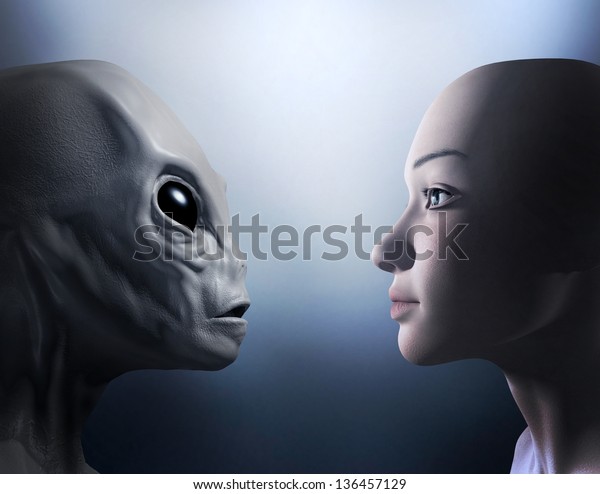
Despite their Earthly origins, would the genetically engineered life forms be considered “Earthly”? Are Artificial Humans human or alien? What does being alien mean? Here’s a definition: “An alien is a creature from another world, a person living in a country where they are not a citizen, or something very strange and unfamiliar. Extraterrestrial (Not of Earth; Outer Space): A living being that comes from a planet other than Earth. Science Fiction: Popularly shown in movies and books as life forms from distant galaxies (sorry AI overview, not even close. Vulcans; Klingons; Na’vi; Xenomorphs; ET; Superman; Jawas; or Dalek – are NOT from distant galaxies. They’re from alien WORLDS )
So…genetically engineered life forms – like the Artificial Humans – are not technically FROM Earth, but Mars…If there was no Mars, there wouldn’t be AH (or “ayches”) there. So…they are, in a strict way “alien”. In fact, even though some of the aliens listed above are at least PART-Human, they aren’t ALL Human…so are they actually ALL aliens?
I’m not even sure myself, but I’ll be thinking about it as time goes on...comments welcome (as long as they're thought out, not reactionary, and polite!)
Sources: https://en.wikipedia.org/wiki/Extraterrestrial_life
Image: https://image.shutterstock.com/image-illustration/alien-human-600w-136457129.jpg
Each Tuesday, rather than a POSSIBLY IRRITATING ESSAY, I'd like to both challenge you and lend a helping hand. I generate more speculative and teen story ideas than I can ever use. My family rolls its collective eyes when I say, "Hang on a second! I just have to write down this idea..." Here, I'll include the initial inspiration (quote, website, podcast, etc.) and then a thought or two that came to mind. These will simply be seeds -- plant, nurture, fertilize, chemically treat, irradiate, test or stress them as you see fit. I only ask if you let me know if anything comes of them. Octavia Butler said, “SF doesn’t really mean anything at all, except that if you use science, you should use it correctly, and if you use your imagination to extend it beyond what we already know, you should do that intelligently.”
SF Trope: inside a computer system
Event: http://www.newscientist.com/article/dn23343-interspecies-telepathy-human-thoughts-make-rat-move.html
Old Event: http://en.wikipedia.org/wiki/Willard_(1971_film)
Amelia Qasoori curled her lower lip, tucking it under her teeth then tapped them as she stared at the Apple 27 inch Cinema Display screen. She tapped another key on her computer.
Artem Torres tossed his backpack on the lab table, peeked over her shoulder then went to his own computer and booted it up. His screen was much smaller however and there were multiple images. All of the images were of rats.
Amelia glanced over at him and wrinkled her nose and said, “I don’t know how you can stare at those ugly things all day long.”
He smirked at her and said, “I can open the cages and play with them if you’d like.”
“You’re both obscene and disgusting at the very same instant,” she said, leaning closer to her screen and tapping a section of an image. The screen was covered with tiny squares.
“What’s even more disgusting and obscene is that we’re trying to do the same thing with organic and inorganic matter.”
Amelia nodded slowly as she tapped another square then made an entry on an old-fashioned yellow notepad with an even older-fashioned pencil. She made a few more notes, then typed for several minutes. The images on the screen whirled wildly and when they were done, Artem leaned back on his lab stool, looked at the image and said, “I don’t see any difference.”
Amelia made a raspberry. “That’s because you’re a wetwareologist. You people couldn’t feel your way off a kindergartner’s graphing calculator.”
“That’s not true! I use computer modeling all the time!” He waved at his smaller computer screen. “Just because everything I do is reality instead of virtuality doesn’t mean it’s not important.”
“I’m not talking about ‘importance’ here, Art! I’m talking about relevance. What I do is relevant. What you do is...cute in a sort of old-fashioned way.”
From behind them, a stentorian voice spoke, “My two favorite high school geniuses continue to banter mindlessly, ignoring my strict instructions to MELD the techniques and technology to form something new.”
Artem and Amelia jumped to their feet, spinning around. In unison they said, “Hello, Dr. Willard.”
He nodded to them and passed between them. He was tall. Unusually tall, well over two meters tall. He patted both of them on their heads. “So, my tremendous twins, what do you have for me today?”
“Look, Dr. Willard, I can make a fine rat robot for you! There’s no need for...”
“Dr. Willard, if you get me some really great tech who won’t talk back every time I ask for something, I could have a ‘borg rat ready for you in two shakes of a…a...”
“A rat’s tail, Mr. Torres? There’s no need for me to have a biological brain, Ms. Qasoori?” He stood back and studied her screen. Then he stepped sideways and leaned forward to study Artem’s screen. Straightening, he said, “What I need, dear pupils, is a seamlessly integrated part organic-part inorganic creature to do a very, very interesting job.” He favored each one with a cold glare, then left the lab, adding without turning around, “A word from me can get you into the most select graduate study programs in the world.” He stopped in the doorway, and still without turning around, said, “A word form me can get you barred from the most pathetic study programs in the world.”
Names: ♀ Australian (NSW), Pakistan; ♂ Russian, Spanish
On October 7, 2007, I started this blog. Eighteen years later, I am revising and doing some different things. My wife and I are now retired senior citizens, our kids are both married, we have a bonus daughter and her wife and we have three grandchildren, (with a fourth on-the-way!) the oldest of which will soon finish his first year in high school, one smack in the center of Middle School; the third almost done with kindergarten. I have forty-five professional publications, plus countless other publications as a slushpile reader, and sometime essay contributor to Stupefying Stories https://stupefyingstories.blogspot.com/.
These days, I write whenever I want to – or when I’m not busy exploring the world with my wife or kids or grandkids. I write and read constantly. Then I discovered that I was writing longer and longer pieces. My new focus is to write shorter; and to write HUMOR. On purpose. Maybe I can still irritate people while being funny. It works pretty well for John Scalzi! We’ll see what happens.
I have a deep history dealing (or NOT dealing, as the case may be) with reconciliation. I’ve written on it several times, most recently “Spiderman 3” (here’s a link to the whole thing: https://faithandsciencefiction.blogspot.com/2024/01/possibly-irritating-essay-spiderman-3.html); but even though “The Lego Movie”, and “Mary Poppins”, and “Star Trek: Wrath of Khan” are all father-son reconciliation scripts, I’ve never once tried to WRITE a reconciliation story, in particular a FATHER-SON reconciliation story…
Christopher Brown wrote, “one writer half-jokingly called [it] reconciliationpunk”…in the sense that, to be able to imagine authentically better futures in our stories, we need to do a better job of understanding the past. Science fiction’s joy in freeing itself from the gravity of the real world gives it an intrinsic tendency to be ahistorical.”
I said I’d return to “Interstellar”, and I will, but here I only want to point you to my essay (https://faithandsciencefiction.blogspot.com/2014/11/possibly-irritating-essays-interstellar.html) and say that I’m not ready to continue it yet…(I DID however pull it up and will read it (sooner, rather than later)…)
In my own, published work (see the links to the right), I don’t even see an attempt to deal with my issue…so, maybe I haven’t even tried? Maybe my limited number of publications have depended more on meeting a need or “clever story-telling” rather than writing about something important to me.
I’ll be looking into this idea of “reconciliationpunk”. He concludes the article with the following: “…utopian aspirations…are not easy to find in our science fictions…even as we populate them with more diverse and liberated communities….Reconciliation commissions in imaginary worlds are a weird way to find our way to better futures in the real one. But in a world ‘ruled by fictions of every kind,’ it takes the tools of make-believe to expose the real-world truth.” (Author of of Tropic of Kansas, co-editor of Three Messages and a Warning: Contemporary Mexican Short Stories of the Fantastic. His new novel Rule of Capture.)
I have one final thought/observation that will be (most likely) dislikable at best and cause brutal accusations at worst. Brown writes in conclusion of the article, “…a lot of these broken America stories [exhibit a] desire for a kind of truth and reconciliation commission that would finally deliver justice for the crimes committed in our names by the nation-states of which we are each a constituent part, and to hold accountable the individual perpetrators of institutional wrongs.” I find this terrifying…who, precisely decides what an “institutional wrong” is? The obvious answer that comes across in this essay is that the ones who commit the “institutional wrongs” are the ones who we disagree with and who have what WE judge to be “wrong thought” or “crazy beliefs” or even “don’t have any idea what ‘they’ are talking about.” Which group of people decide what an “institutional wrong” is? The clearest answer that most people would ejaculate instantly, is “Anyone who voted for Trump and anyone who pretends to believe that Trump and his government should NOT be summarily executed without trial or consideration!”
This is…well. I’m just going to stop there because if someone who thinks my fears are ridiculous “because NORMAL people obviously want Trump and anyone who didn’t violently object to anything his government did OUT OF THERE NOW, and the Other Party will fix everything because they’re sane, unlike Trumpites.”
Short of a-Trumpers taking over completely and shutting down any dissent whatsoever, I don’t see anything even approaching “reconciliation” in our future…
So, that leads me to write about my own personal reconciliation, which is, of course where I started this essay. I can’t handle any of this…so, what makes me think I can write about characters with interpersonal reconciliation issues and how they link with the LARGER issues of societal reconciliation.
I watch the news and I live in a northern suburb of Minneapolis. (Lest you think to “tut-tut” my thoughts and worries, follow this link (Minneapolis Metro Area population = 3,757,952 residents; Minneapolis PROPER = 430,162; Brooklyn Center’s population is 31,846”. Current number of crimes in Minneapolis proper: 65.4 total crimes per 1,000 residents (roughly a 1 in 15 chance of becoming a victim of either property or violent crime); Current number of crimes in Brooklyn Center: 33.70 incidents per 1,000 to see what I am talking about: feel free to peruse this link: https://www.neighborhoodscout.com/mn/brooklyn-center/crime)
We have many friends here and while we KNOW we need to be cautious, we don’t live in fear. We shop local, schooled local, (I taught in a school where 65% of students were non-white – both of my kids graduated from the school)…
So, what am I talking about reconciliation for?
It’s hard work. And maybe…just MAYBE…I can start to write about reconciliation BOTH societally and personally. Then maybe, just maybe, my fiction can begin to make a difference…
LINK: “Christopher Brown Guest Post–‘Truth and Reconciliation and Science Fiction’”; https://locusmag.com/feature/christopher-brown-guest-post-truth-and-reconciliation-and-science-fiction/
Inspiration: https://faithandsciencefiction.blogspot.com/2019/02/possibly-irritating-essays.html Image: https://t3.ftcdn.net/jpg/14/61/31/10/240_F_1461311036_MViWj3gBpw4LNjp4h0mdikU2gho7a51c.jpg